
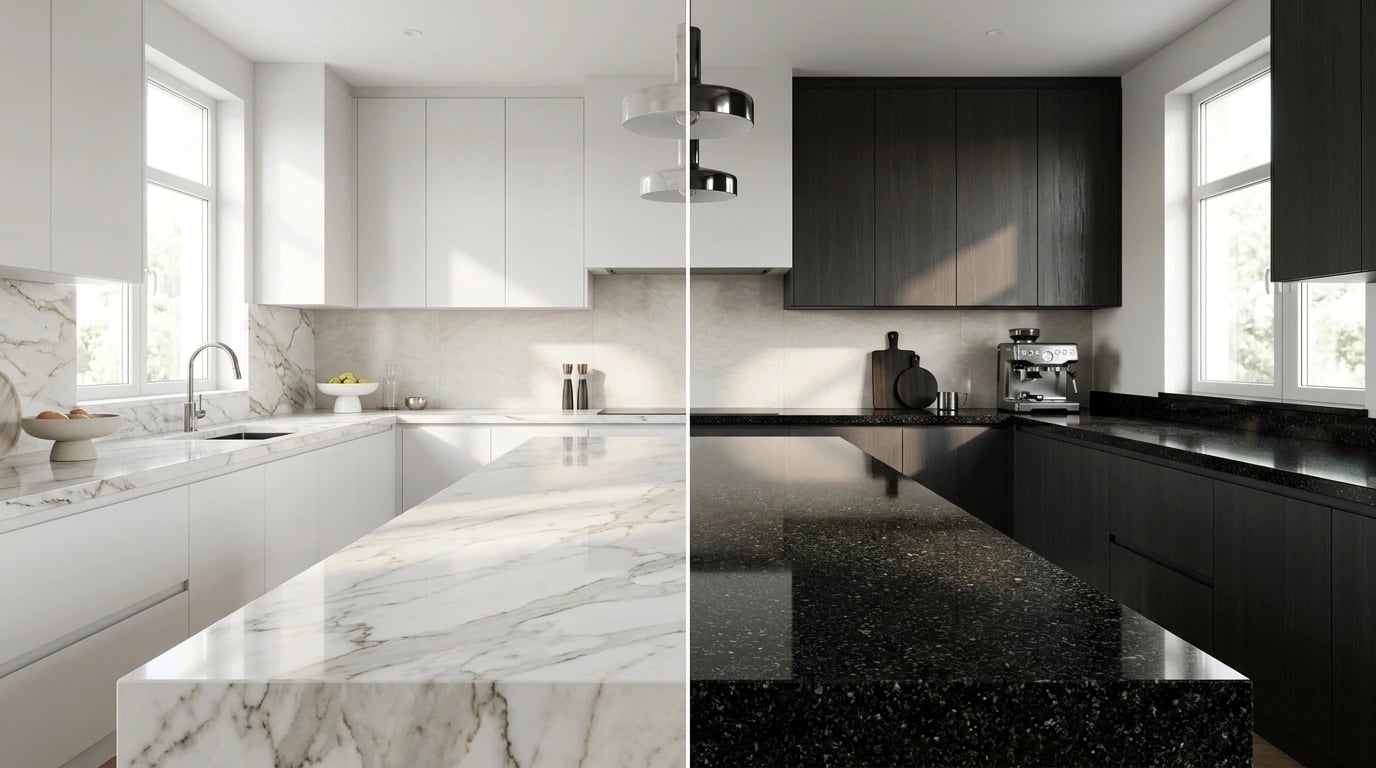
When it comes to selecting natural stone for high-traffic surfaces like flooring, staircases, and kitchen worktops, the debate almost always boils down to two giants: Granite and Marble. While both are elegant geological wonders, their composition, performance, and aesthetic impact are fundamentally different.
1. Geological Composition & Durability
- Granite: An igneous rock formed from slowly cooling molten magma. It consists mainly of quartz and feldspar, making it one of the hardest minerals on Earth. It is extremely scratch-resistant, heat-resistant, and chemically stable.
- Marble: A metamorphic rock formed when limestone is subjected to intense heat and pressure. It is composed primarily of calcium carbonate, which is significantly softer (Mohs hardness of 3-4 compared to Granite's 6-7) and highly reactive to acids.
2. Aesthetic Appeal & Patterns
- Granite typically displays a granular, speckled pattern with varied minerals catching the light. It has a flecked, multi-colored look that is excellent at hiding dust and small stains.
- Marble is prized for its soft, flowing veining patterns. It offers a classic, sophisticated, and clean look with deep visual transparency that granite rarely replicates.
3. The Countertop Battle
For kitchen worktops, Granite is the undisputed functional champion. It does not etch from spilled lemon juice, is highly stain-resistant, and hot pans can be placed directly on it. Marble in a kitchen will acquire a "patina" over time — minor scratches and etches that give it an aged, lived-in character. If you want a pristine white worktop without the maintenance, granite or quartzite is your best choice.
4. Maintenance Requirements
- Granite: Low maintenance. Seal once every 2-3 years. Simple soap and water is all that is required for daily upkeep.
- Marble: High maintenance. Seal annually. Clean exclusively with pH-neutral cleaners. Place coasters under glasses and trivets under hot pans.
Tags:
